
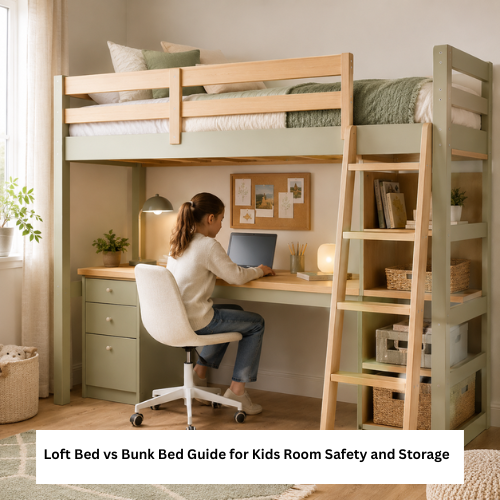
The loft bed vs bunk bed decision depends on your child’s age, room size, sleep needs, storage needs, and safety comfort. Both options can save floor space, but a loft bed usually opens space below for a desk, play area, or storage, while a bunk bed gives two sleeping spaces in one footprint.
Parents should compare layout, ladder access, guardrails, ceiling height, mattress fit, and daily use before choosing. At kids furniture hub, families can explore space-friendly bedroom ideas for growing kids, shared rooms, and small bedrooms.
Why Parents Compare Loft Beds and Bunk Beds
Loft beds and bunk beds are popular because children’s rooms often need to handle sleep, storage, play, and study in one area. The right choice can make the room feel more organized.
A loft bed may work better for one child who needs more floor space. A bunk bed may work better for siblings sharing a room or families who need an extra sleeping spot.
How to Compare Loft Bed vs Bunk Bed
Loft bed vs bunk bed choices should start with room measurements and safety needs. Measure ceiling height, bed footprint, ladder space, door swing, window position, and where drawers or desks will open.
Before buying, check:
- Room size and ceiling height
- Child’s age and comfort with climbing
- Guardrail design
- Ladder or stair placement
- Mattress size and thickness
- Weight limit listed by manufacturer
- Desk or storage needs
- Assembly instructions
- Replacement parts
- Return policy
| Option | Best For | Buyer Benefit | Limitation | Verify Before Buying |
| Loft bed | One child in a small room | Opens space under the bed | Requires climbing | Height, guardrails, and ceiling clearance |
| Bunk bed | Shared bedrooms | Two sleep spaces in one footprint | Needs safe top-bunk access | Ladder, guardrails, and mattress fit |
| Low loft bed | Younger kids or lower ceilings | Easier access and play space | Less under-bed height | Floor clearance and age guidance |
| Loft bed with desk | Study and sleep combo | Saves space for homework | Desk height may vary | Desk size and chair clearance |
| Storage bunk bed | Shared rooms with clutter | Adds drawers or shelves | Can be heavier to move | Drawer access and room layout |
Kids Loft Bed Space Planning
A kids loft bed can be useful when the room needs a study corner, reading area, toy storage, or open play space below the bed. This setup works best when the child is comfortable climbing and the room has enough ceiling clearance.
Do not place a tall bed too close to ceiling fans, windows, or unstable furniture. Always follow the manufacturer’s setup and safety instructions.
Kids Bunk Bed for Shared Rooms
A kids bunk bed can help siblings share a room while keeping more floor space open. It can also be useful for sleepovers if the room layout allows it.
Before choosing a bunk bed, check ladder placement, guardrail height, mattress fit, and how easily sheets can be changed. If the top bed feels difficult to access safely, a different layout may be better.
Space Saving Bed and Small Room Layout
A space saving bed can help families use one room for sleeping, playing, and storage. The best option depends on what the child needs most: a second mattress, a desk, drawers, or open floor space.
For small kids room ideas, leave clear walking paths around the bed. Avoid blocking closet doors, windows, outlets, or heater vents.
Loft Bed with Desk Setup Tips
A loft bed with desk can create a compact homework area under the bed. This works well when the desk height, chair space, lighting, and storage layout fit the child’s daily routine.
Check whether the desk is built in or separate. If it is built in, verify the workspace size before buying. If it is separate, measure carefully so the desk and chair fit under the bed.
Bunk Bed Safety Checks
A bunk bed safety review should include guardrails, ladder strength, mattress fit, room placement, and manufacturer age guidance. Do not assume every bunk bed works for every child.
Safety tips:
- Follow all manufacturer instructions
- Verify mattress thickness
- Keep climbing areas clear
- Check bolts and hardware regularly
- Keep beds away from ceiling fans
- Avoid hanging cords or loose fabric from bed frames
- Recheck stability after assembly
Cleaning and Maintenance
Beds with ladders, drawers, desks, or shelves need regular checks. Dust under the bed, check corners, tighten hardware when needed, and keep the ladder area clear.
If the bed includes drawers or a desk, make sure they open smoothly and do not block walkways.
Common Buying Mistakes
Avoid these mistakes:
- Not measuring ceiling height
- Buying before checking mattress fit
- Ignoring ladder placement
- Choosing a bed that blocks windows or closets
- Forgetting study or storage needs
- Assuming all top beds are suitable for every child
- Skipping return policy and replacement part checks
Troubleshooting Room Setup Problems
If the room feels crowded after assembly, remove extra furniture and keep only daily-use items nearby. If the ladder blocks a walkway, consider a different orientation if the design allows it.
If the child feels uncomfortable climbing, a lower loft, standard bed, or floor-level option may be safer and more practical.
Practical Buying Checklist
Before buying, confirm:
- Size or fit: Bed footprint, ceiling height, mattress size, and ladder space match the room
- Compatibility: Design works for the child’s age, sleep routine, and room layout
- Safety: Guardrails, ladder, hardware, and manufacturer guidance are clear
- Material or build quality: Frame, joints, slats, finish, and hardware look reliable
- Setup or installation: Assembly steps, tools, and room clearance are manageable
- Maintenance: Hardware checks and cleaning access are simple
- Warranty: Verify before buying
- Return policy: Check before ordering
- Replacement parts: Verify slats, guardrails, ladders, drawers, and hardware
- Delivery or support: Confirm shipping, delivery size, and setup needs
- Verify before buying: Do not assume age suitability, ceiling clearance, mattress thickness, or weight limits
Conclusion
The loft bed vs bunk bed choice should be based on room size, child safety, sleeping needs, and how the space will be used every day. A loft bed vs bunk bed comparison is most helpful when parents measure first, check manufacturer guidance, and choose the option that supports sleep, storage, study, and safe movement.
FAQ
Is a loft bed better than a bunk bed?
A loft bed is better for one child needing floor space, while a bunk bed is better for shared sleeping.
What should I measure before buying?
Measure ceiling height, bed footprint, ladder space, mattress size, and room clearance.
Is a loft bed with desk good for small rooms?
Yes, if the desk height, chair space, lighting, and clearance fit the child’s needs.
What safety details matter most?
Check guardrails, ladder strength, mattress fit, hardware, room placement, and manufacturer guidance.
What should I verify before buying?
Verify size, age guidance, material, hardware, mattress fit, warranty, return policy, and replacement parts.
