
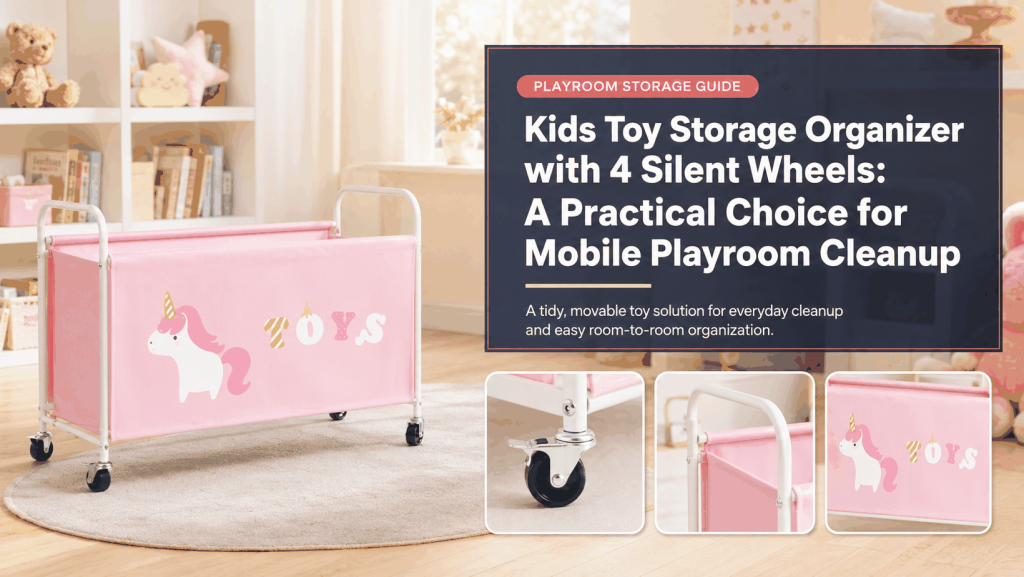
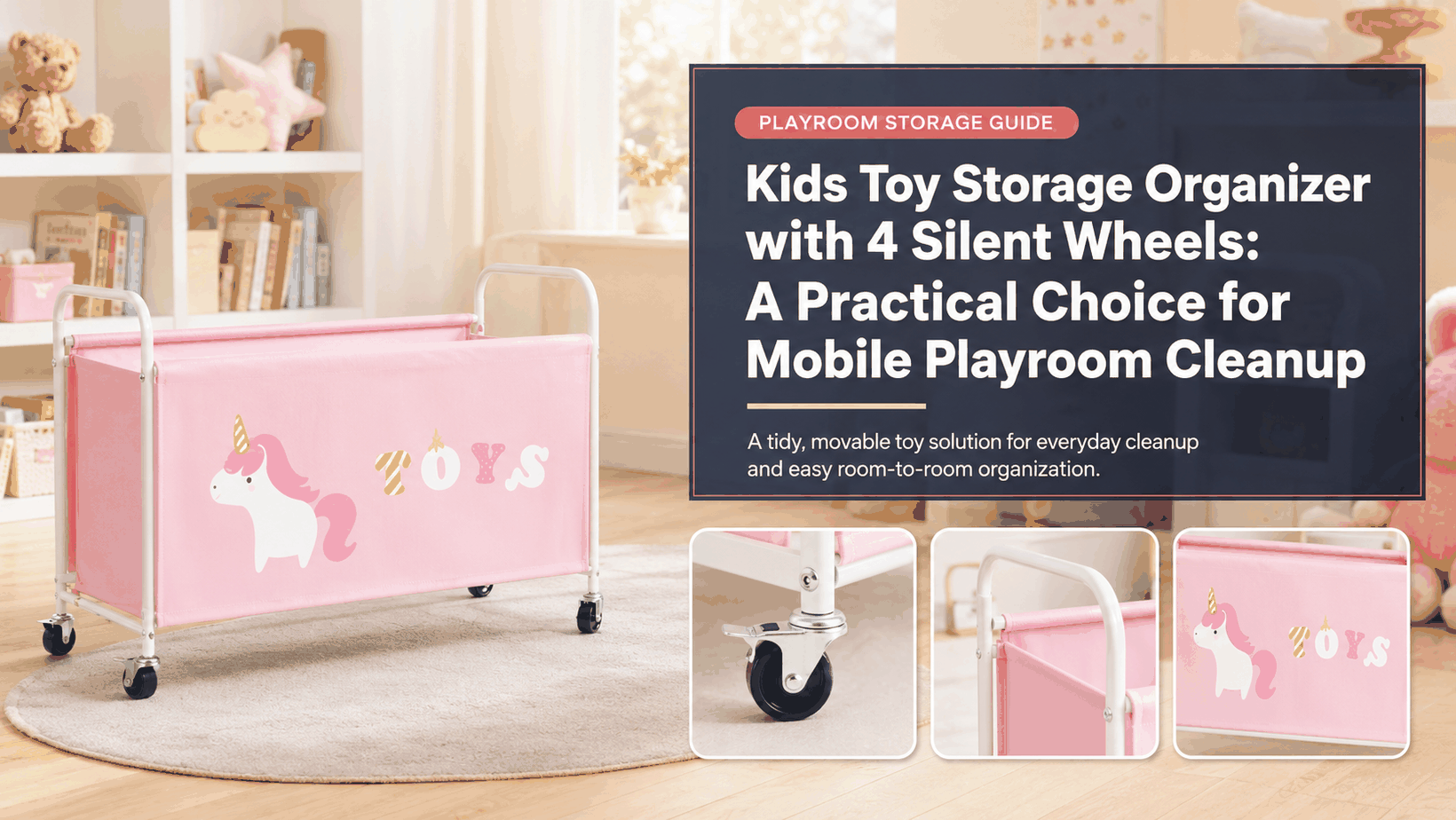
Kids Toy Storage Organizer with 4 Silent Wheels deserves to be judged by the way it fits the room and the family routine, not by the product name alone. Rolling storage can help when toys move between a playroom, bedroom, nursery corner, or shared family space, but wheel control and child access matter more than mobility alone.
This guide is for parents managing changing play zones in compact rooms. It focuses on storage capacity, space use, cleanup habits, child access, assembly, and placement without assuming that wheels automatically make an organizer safer or easier to live with.
Kids Toy Storage Organizer with 4 Silent Wheels: Fit, Function, and Daily Use
The stored product record describes an Eapura organizer with three shelves, removable fabric storage, assembly required, and four anti-skid wheels. The record also lists living room, playroom, and nursery as use locations. Verify the current seller page because dimensions, components, wheel details, and load guidance can change.
For Kids Toy Storage Organizer with 4 Silent Wheels, room planning should include the furniture footprint plus the space needed to open, move, reach, sit, sort, or step around it during normal use. Parents often measure only the frame and then discover that bins, doors, stools, chairs, hanging clothes, or a child’s body need extra clearance.
For a compact family room, the organizer should have one clear parking position. Children need access to everyday toys without having to pull the unit into a doorway, across stairs, or beside unstable furniture.
Six Buying Questions to Work Through
Kids Toy Storage Organizer with 4 Silent Wheels Storage Capacity
Start by estimating the volume of toys that genuinely need to remain in the active play zone. Kids Toy Storage Organizer with 4 Silent Wheels storage capacity Compare the available bins with books, plush toys, blocks, and awkward shapes rather than judging capacity from an empty product photo.
Kids Toy Storage Organizer with 4 Silent Wheels Space-saving Layout
A compact footprint is useful only when access remains easy. Kids Toy Storage Organizer with 4 Silent Wheels space-saving layout Measure wall width, depth, wheel clearance, and the turning path before deciding that the unit saves space.
Kids Toy Storage Organizer with 4 Silent Wheels Daily Cleanup Routine
Cleanup improves when each bin has a predictable purpose. Kids Toy Storage Organizer with 4 Silent Wheels daily cleanup routine Use a small number of categories the child can recognize and keep the most-used items in the easiest positions.
Kids Toy Storage Organizer with 4 Silent Wheels Child-accessible Organization
Independent access works best when the storage height and bin weight match the child. Kids Toy Storage Organizer with 4 Silent Wheels child-accessible organization Keep heavy items low and avoid placing tempting climbable objects on top.
Kids Toy Storage Organizer with 4 Silent Wheels Assembly Considerations
Adult assembly should include a hardware count, wheel check, fastener recheck, and review of the current instructions. Kids Toy Storage Organizer with 4 Silent Wheels assembly considerations Test the unit empty before loading it and confirm that nothing rocks or binds.
Kids Toy Storage Organizer with 4 Silent Wheels Room Placement Ideas
Choose a parking place before the organizer is filled. Kids Toy Storage Organizer with 4 Silent Wheels room placement ideas Keep normal walkways, doors, vents, stairs, and furniture anchoring points clear.
Mobile Toy Storage Planning Table
Use this table to compare Kids Toy Storage Organizer with 4 Silent Wheels with the demands of the room. The goal is not to score every feature equally; it is to identify which details change safety, access, cleanup, comfort, or long-term usefulness.
| Decision Point | What to Check | Why It Matters |
|---|---|---|
| Toy mix | Books, plush toys, blocks, dress-up items | Different shapes need different bin depths |
| Floor route | Hard floor, rug, threshold, doorway | Wheels behave differently across surfaces |
| Child access | Reach height and bin weight | Supports realistic independent cleanup |
| Parking zone | Clear wall or corner location | Prevents the unit from becoming a moving obstacle |
| Assembly | Fasteners and wheel installation | Stability depends on correct setup |
Build a Cleanup Routine Around One Parking Zone
Begin with fewer categories than you think you need. If every bin has a complicated label, adults end up doing the sorting. A simple system such as books, building toys, soft toys, and mixed small items is easier to repeat.
Move the organizer only when the route is clear and an adult can control it. Children can help return toys to bins while the furniture itself remains parked, which separates the benefit of mobile storage from the risk of unnecessary rolling.
Before the Furniture Goes Into Daily Use
- Measure the full parking footprint
- Check the wheel path and floor transitions
- Sort toys before loading the unit
- Place heavier items in lower positions
- Confirm every fastener is tight
- Test stability with the organizer loaded
- Keep climbing temptations off the top
- Recheck wheels and hardware periodically
If the family regularly moves the organizer between rooms, define where it may travel and where it may not. A repeatable route is easier to manage than letting the unit become a general ride-on or push toy.
Keep Mobile Storage Stable and Childproofed
A storage unit can become a climbing target when favorite toys are kept high. Do not rely on quiet wheels, anti-skid labels, or adult supervision alone to compensate for unstable loading or unsafe placement.
For broader home furniture safety, review the CPSC Anchor It furniture tip-over guidance and follow the manufacturer’s anchoring or anti-tip instructions whenever they apply to the specific organizer.
Stop using the organizer if a wheel loosens, a frame joint separates, a panel cracks, or movement becomes difficult to control. Repair or replace damaged parts according to the manufacturer’s directions.
Choose Mobility Only When It Simplifies the Room
The strongest reason to choose rolling storage is workflow: toys can come closer to an activity and then return to one parking place. If the wheel behavior, bin access, room route, and sorting system all fit the household, mobility can reduce repeated carrying without turning furniture movement into another daily task.
The final decision on Kids Toy Storage Organizer with 4 Silent Wheels should come from measured room fit, current manufacturer information, the child’s age and abilities, and a routine the family can maintain. A feature is valuable only when it solves a real household problem without creating avoidable clutter or risk.
Frequently Asked Questions
Do silent wheels matter more than wheel locks?
Quiet movement is convenient, but stability and control are more important. Verify the current wheel design and supervise movement.
Can a rolling organizer work on carpet?
It depends on wheel diameter, carpet pile, load, and thresholds. Test the planned route or verify manufacturer guidance.
Should heavy toys be stored on top?
Keep heavier items low when possible to improve access and reduce a high center of gravity.
How many toy categories should a child manage?
Use as few categories as the child can recognize consistently. Simple sorting is easier to maintain.
Can rolling storage replace a bookshelf?
Only when books remain supported and easy to see. A dedicated book display may still work better for frequent reading.
