
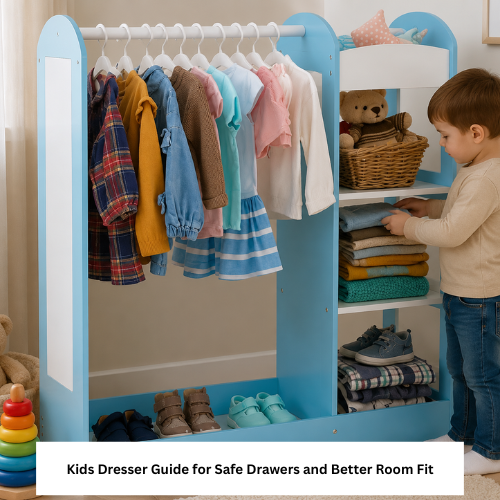
A kids dresser should provide useful clothes storage without creating unstable drawers, blocked walkways, or difficult access. Parents need to compare room measurements, drawer depth, hardware, material quality, anchoring instructions, and how the child will use the furniture.
Do not select a dresser by drawer count alone. A wide six-drawer unit and a narrow tall unit can create very different safety and room-fit considerations.
How to Choose a Kids Dresser for Safe Storage
Start with the type and volume of clothing. Shallow drawers can suit socks and small items, while deeper drawers may hold folded sweaters, bedding, or seasonal clothes.
| Dresser style | Best use | Main benefit | What to verify |
| Low wide dresser | Shared top surface and easy reach | Lower profile and broad storage | Wall width, drawer travel, and anchoring |
| Tall narrow dresser | Limited floor space | Uses vertical room space | Stability, height, and tip-restraint setup |
| Nursery dresser | Baby clothes and changing supplies | Organized small-item storage | Top-use guidance and future compatibility |
| Fabric drawer unit | Lightweight temporary storage | Easy to move | Frame strength, drawer stops, and load limits |
| Dresser wardrobe combination | Hanging and folded clothes | Multiple storage methods | Overall size and connector stability |
Measure Drawers and Room Clearance
Measure the wall, floor depth, skirting board, nearby doors, and the space required when drawers are fully open. Keep a clear route between the bed, doorway, and play area.
A VIPZONE baby dresser for a kids bedroom may offer dedicated clothing storage, but buyers should verify the current dimensions, drawer construction, anchoring hardware, materials, and assembly requirements.
Check the usable interior drawer size rather than relying only on exterior dimensions. Drawer sides, runners, and the back panel reduce internal capacity.
Drawer Safety and Anti-Tip Setup
Every drawer should open smoothly and stop as intended. Test one drawer at a time after assembly and never allow children to climb, hang, or stand on open drawers.
A Child Craft Soho one drawer nursery nightstand can provide compact drawer storage beside a bed or nursery chair, although parents should confirm drawer stops, stability, finish care, and wall clearance.
Anchor the dresser according to the manufacturer instructions. The correct wall fastener depends on the wall construction, so verify compatibility before installation.
Compare Materials and Hardware
Inspect drawer bottoms, runners, handles, corners, fasteners, and back panels. Rough edges, loose handles, misaligned drawers, or cracked panels should be corrected before use.
The Child Craft Cranbrook two drawer nightstand offers another small storage layout, but buyers should check drawer depth, runner operation, material details, anchoring guidance, and current product dimensions.
Solid wood, engineered wood, metal frames, and fabric drawer systems require different cleaning and repair methods. Do not use harsh cleaners unless the care instructions permit them.
Alternative Storage for Small Rooms
A MAGINELS portable wardrobe dresser may combine cube and hanging storage in a lighter format, but parents should verify connector strength, door panels, rail capacity, ventilation, and anti-tip instructions.
Alternative units can be useful for rentals or shared rooms, but they should overloaded. Keep heavier items near the bottom and inspect connections after moving the furniture.
Setup and Troubleshooting
Assemble the unit on a clear floor and keep small hardware away from children. Follow the sequence in the manual because tightening parts too early can cause drawer misalignment.
If drawers rub or fail to close, check whether the frame is level, runners are installed on the correct sides, and fasteners are evenly tightened. Stop using a drawer that falls out, jams, or exposes sharp hardware.
Cleaning and Maintenance
Empty drawers before moving the dresser. Dust runners and wipe surfaces with an approved cleaner. Check anchors, handles, feet, drawer stops, and fasteners regularly.
Replace damaged parts with compatible components. Do not improvise a runner, handle, or wall restraint when the replacement has not been approved.
Common Buying Mistakes
Avoid choosing a tall dresser without planning wall anchoring, forgetting full drawer clearance, or using the top as a changing surface without manufacturer guidance. Parents also overlook delivery access and whether the packaged unit can pass through stairs and doors.
Kids Dresser Buying Checklist
- Measure the wall, floor depth, doorway, and full drawer opening.
- Confirm usable drawer width, depth, and storage capacity.
- Check compatibility with the room layout and changing storage needs.
- Review anti-tip hardware, drawer stops, and climbing risks.
- Inspect material, edge finish, runners, handles, and build quality.
- Confirm assembly, leveling, and anchoring instructions.
- Review cleaning, maintenance, and replacement-part options.
- Check warranty, return policy, delivery condition, and support.
- Verify before buying when measurements or safety hardware are unclear.
Conclusion
A kids dresser should fit the room with its drawers fully open, remain anchored and stable, and provide compartments that match the child’s clothing. Kids furniture hub gives families relevant dresser and drawer-storage options to compare for bedrooms and nurseries.
FAQ
Should every child dresser be anchored?
Follow the product instructions. Tall, heavy, or climbable storage commonly requires a compatible wall restraint.
Is a tall dresser better for a small room?
It saves floor width, but height can increase anchoring and reach concerns. Compare the full room layout.
Can a dresser top be used as a changing table?
Only when the manufacturer supports that use and the required changing setup is installed correctly.
Why do new drawers fail to align?
Common causes include an uneven floor, reversed runners, loose fasteners, or an out-of-square frame.
