
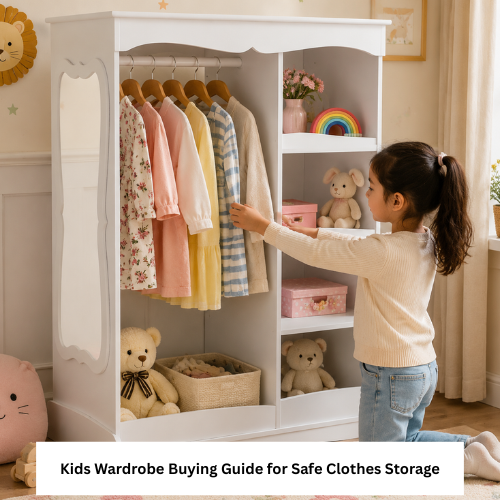
A kids wardrobe should hold everyday clothes, school items, seasonal layers, and accessories without making the room difficult to use. The best choice depends on floor space, ceiling height, door clearance, hanging needs, shelf layout, and how safely the unit secured.
Parents should measure the room before comparing styles. Product names such as compact, portable, or child size do not confirm exact dimensions, so verify before buying.
How to Choose a Kids Wardrobe for Daily Storage
Start by listing what the unit must hold. Hanging rails suit dresses, coats, and uniforms, while shelves and cubes are useful for folded clothing, shoes, bags, and storage baskets.
| Wardrobe type | Best use | Main benefit | What to verify |
| Tall cabinet wardrobe | Long-term bedroom storage | Combines hanging and shelves | Height, anchoring hardware, and door clearance |
| Open hanging wardrobe | Frequently used clothing | Easy access for children | Rail strength and exposed item safety |
| Portable fabric wardrobe | Temporary or rental spaces | Lighter and easier to move | Frame stability and fabric durability |
| Dress-up wardrobe | Costumes and play clothes | Child-friendly access | Mirror safety, hooks, and tipping prevention |
| Cube wardrobe | Folded clothes and baskets | Flexible compartment storage | Connector strength and load guidance |
Measure the Room and Furniture Path
Measure the wall width, floor depth, ceiling height, skirting boards, nearby outlets, and the space needed to open doors or drawers. Also measure hallways, stairs, and bedroom doors so the packaged or assembled furniture can reach the room.
A modular baby wardrobe closet may suit flexible storage planning, but buyers should verify the assembled dimensions, connector system, hanging capacity, and anchoring instructions.
Leave clearance around heating vents, windows, doors, and walking paths. Do not place a tall unit where an open door blocks the room exit.
Compare Hanging, Shelf, and Drawer Space
Estimate how many garments need hangers and how much folded storage is required. A rail that is too high may prevent a child from using the wardrobe independently, while a low rail can waste space needed for longer clothes.
The Guidecraft rotating dress up wardrobe can support costume storage and playroom organization, although parents should verify the rotating base, mirror material, hooks, trays, and required floor clearance.
Choose adjustable shelves when storage needs are likely to change. Check whether shelf pins lock securely and whether small parts remain inaccessible to younger children.
Portable and Small Room Options
A portable kids closet wardrobe may help in apartments, shared bedrooms, or temporary spaces, but the frame, cover, zipper, joints, and anti-tip guidance should be checked before use.
Portable units should not be overloaded or used as climbing furniture. Keep heavy items low and inspect the frame after moving the unit.
For a more enclosed option, a MAGINELS kids wardrobe closet cabinet may provide cube-based storage, but buyers should confirm panel material, connector quality, ventilation, door operation, and current load guidance.
Wardrobe Safety and Setup
Anchor tall or climbable furniture according to the manufacturer instructions and wall type. Use the supplied hardware only when it is compatible with the wall, and obtain suitable fixings when the manufacturer requires alternatives.
Keep heavy objects on lower shelves. Avoid storing breakable items, cords, medicine, cleaning products, or small choking hazards where a child can reach them.
Check hinges, handles, mirrors, magnets, rails, and door stops. Doors should move smoothly without pinching fingers or pulling the unit forward.
Materials, Cleaning, and Maintenance
Compare solid wood, engineered wood, metal frames, fabric covers, and plastic panel systems by stability, cleaning method, odor, edge finish, and repair options. Do not assume that a material description confirms durability or safety certification.
Wipe surfaces with the approved method and dry them promptly. Tighten loose fasteners, replace damaged connectors, and stop using the wardrobe if it leans, cracks, or develops sharp edges.
Common Buying Mistakes
Avoid buying without checking the assembled size, choosing too little hanging space, ignoring anchoring instructions, or placing a wardrobe over a vent. Another common mistake is selecting a lightweight unit for heavy storage without checking its load guidance.
Kids Wardrobe Buying Checklist
- Measure wall width, depth, height, doors, stairs, and delivery access.
- Confirm hanging rail height, shelf spacing, and storage capacity.
- Check compatibility with baskets, hangers, and room layout.
- Review anchoring, anti-tip, mirror, hinge, and pinch-point safety.
- Inspect materials, edge finish, connectors, and build quality.
- Confirm assembly tools and installation instructions.
- Review cleaning, maintenance, and replacement-part availability.
- Check warranty, return policy, delivery protection, and support.
- Verify before buying when dimensions or hardware are unclear.
Conclusion
The right kids wardrobe should fit the room, separate hanging and folded clothes, remain stable, and support changing storage needs as a child grows. Kids furniture hub offers relevant wardrobes and organizers for parents comparing safe bedroom storage.
FAQ
Should a child wardrobe be anchored to the wall?
Tall or climbable furniture should be secured according to the manufacturer instructions and the wall type.
Is an open wardrobe suitable for young children?
It can be, provided the frame is stable, hooks are safe, and stored items cannot fall or create hazards.
How much clearance is needed for wardrobe doors?
Measure the full door swing or sliding path and keep nearby furniture and room exits clear.
Are portable wardrobes suitable for heavy clothing?
Only within the stated load guidance. Check the frame, connectors, rail, and anti-tip instructions.
