
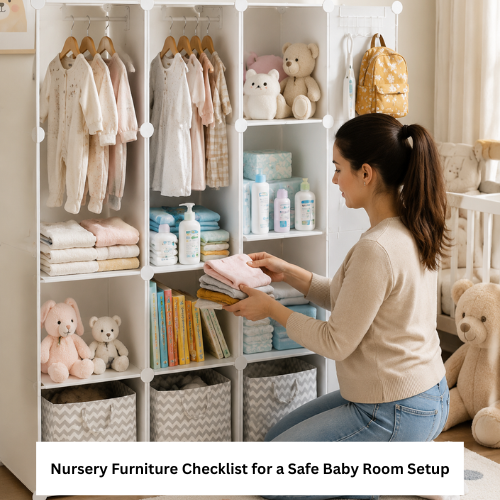
Nursery furniture should support safe sleep, clothing changes, feeding, storage, and everyday movement without crowding the room. Parents should plan the crib location, dresser placement, changing area, storage access, lighting, and walking paths before ordering large items.
Room measurements and manufacturer instructions matter more than matching furniture sets. Verify every product’s current dimensions, assembly method, materials, and intended age or use before buying.
How to Plan Nursery Furniture for the Room
Draw a simple floor plan with doors, windows, outlets, heating vents, and the full swing of closet doors. Add the depth of drawers and cabinet doors when open.
| Nursery item | Main purpose | Placement priority | What to verify |
| Crib | Safe sleep space | Clear of cords, windows, and unstable furniture | Current instructions, mattress fit, and assembly |
| Dresser | Clothing and supply storage | Anchored with drawers clear of walkways | Drawer stops, hardware, and dimensions |
| Changing area | Organized diaper changes | Stable surface with supplies within adult reach | Approved use and cleaning method |
| Wardrobe or closet organizer | Hanging and folded clothing | Accessible without blocking doors | Stability, rail height, and anchoring |
| Shelves | Books and lightweight decor | Securely installed away from the crib | Wall compatibility and load guidance |
Start With the Crib and Sleep Zone
Choose the crib before filling the room with secondary storage. Confirm the mattress and crib are intended to work together, follow the assembly manual, and keep the sleep area free from unapprov accessories.
Do not position the crib where a baby can reach blind cords, electrical cords, shelves, heaters, or window coverings. Recheck the area as the child grows and becomes able to stand.
Plan Clothing and Closet Storage
A baby closet organizer for a nursery can help separate small clothes, blankets, and supplies, but buyers should verify hanging dimensions, shelf capacity, materials, installation method, and closet compatibility.
Keep frequently used items at adult waist or chest height where possible. Store heavy boxes low and keep small loose parts out of reach.
A modular baby wardrobe closet may provide flexible sections for folded and hanging clothes, although parents should confirm connector strength, ventilation, door security, stability, and wall-anchoring guidance.
Choose a Dresser and Changing Area
A VIPZONE baby dresser for a kids bedroom may provide nursery drawer storage, but buyers should verify drawer stops, dimensions, materials, anti-tip hardware, and whether the top is approved for any changing use.
If a separate changing table is use, confirm the manufacturer’s age, size, and setup guidance. Keep one hand on the baby during changes and never rely on straps as a substitute for adult supervision.
Add Shelves Without Creating Reach Hazards
Wall mounted white nursery bookshelves can free floor space for books and light decor, but parents should verify wall fasteners, shelf depth, installation height, load guidance, and placement away from the crib.
Do not place heavy frames, breakable objects, or cords on shelves above sleeping or changing areas. Recheck fasteners periodically.
Room Setup and Compatibility
Leave a clear path from the door to the crib and changing area. Check whether a chair, dresser drawer, or wardrobe door blocks that route when open.
Plan outlets for approved lighting or monitoring equipment without running cords near the crib. Furniture should not cover ventilation or heating systems.
Cleaning and Maintenance
Use cleaning methods approved for each surface. Dry wood and metal parts promptly, and avoid strong products that leave residue or odor in the room.
Check crib fasteners, dresser anchors, shelf brackets, hinges, drawer stops, and wardrobe connectors regularly. Stop using furniture that wobbles, cracks, leans, or develops sharp edges.
Common Buying Mistakes
Parents often buy a matching set before measuring the room, place shelves above the crib, overlook full drawer clearance, or assume a dresser is automatically approve as a changing table. Another mistake is buying all storage for newborn clothes without planning for larger sizes and toys.
Nursery Furniture Buying Checklist
- Measure the room, doors, windows, outlets, vents, and delivery path.
- Confirm crib, mattress, dresser, wardrobe, and shelf compatibility.
- Plan clear walking space and full drawer or door opening.
- Review anchoring, fasteners, edges, cords, and reach hazards.
- Check materials, finish, ventilation, and build quality.
- Confirm setup, assembly, and installation instructions.
- Plan cleaning, inspection, and future storage needs.
- Check replacement hardware, warranty, return policy, delivery, and support.
- Verify before buying when dimensions or approved uses are unclear.
Conclusion
A complete nursery furniture plan begins with a suitable sleep zone and then adds anchored storage, a practical changing area, and secure shelves without blocking movement. Families can explore kids furniture hub for relevant nursery and bedroom-storage options while verifying every product before purchase.
FAQ
What nursery item should be chosen first?
Start with the crib and sleep area, then plan storage and seating around the remaining safe floor space.
Can a standard dresser become a changing table?
Only when the dresser manufacturer supports that use and the approved changing components are installed correctly.
Where should nursery shelves be installed?
Install them on compatible walls, away from the crib and changing area, using the specified fasteners and load guidance.
How often should nursery furniture be checked?
Inspect fasteners, anchors, drawers, hinges, and surfaces regularly and after moving or reassembling furniture.
