
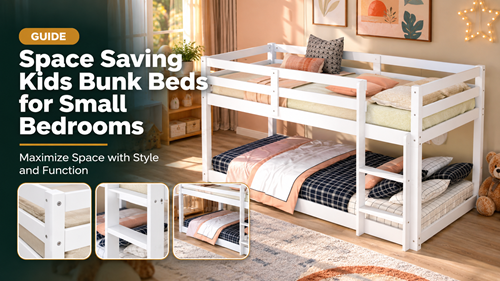
kids bunk beds is easiest to choose when parents start with the room, the child’s age, and the daily routine instead of shopping by appearance alone. Vertical sleeping can free valuable floor area, but a bunk bed only saves space when the ladder, guardrails, ceiling height, and surrounding furniture all fit the room. The right choice should support safe movement, comfortable use, practical cleanup, and enough flexibility for the room to keep working as needs change.
Small bedrooms need disciplined measurements because a few inches can determine whether drawers open, a door swings freely, or the upper bunk feels cramped. This guide focuses on measurements, access, materials, stability, storage, and everyday use so families can compare options without turning the room into a collection of oversized or poorly matched pieces.
Kids Bunk Beds: Fit, Function, and Daily Use
Measure floor width, ceiling height, mattress thickness, and the space above the upper mattress before choosing a frame. A useful buying decision separates the footprint of the furniture from the clearance required to sit, open drawers, climb a ladder, pull out a chair, access storage, make the bed, or walk past the piece.
Consider how children will make the bed, climb down at night, access storage, and share lighting without crossing each other’s sleep zones. Parents should also consider where the furniture will sit in relation to windows, heaters, doors, outlets, ceiling fans, cords, and other pieces a child could use as climbing steps.
For kids bunk beds, the best test is whether the piece makes the room easier to use on an ordinary weekday. If children cannot reach what they need, if adults cannot clean around it, or if one feature blocks another part of the room, the product is not truly space-efficient.
Six Buying Questions to Work Through
Use a Lower Profile When Ceiling Height Is Limited
Low bunk designs may reduce upper-bunk height, but verify lower-bunk headroom and mattress limits. compact bunk beds Use the linked page as one comparison point, then confirm the current dimensions, materials, age guidance, weight limits, and assembly instructions on the exact product being considered.
Compare Twin-Over-Twin Footprints Carefully
Standard mattress naming does not account for ladder projection, guardrails, or frame thickness. twin bunk beds Use the linked page as one comparison point, then confirm the current dimensions, materials, age guidance, weight limits, and assembly instructions on the exact product being considered.
Keep Other Furniture Proportional
A bunk bed can save floor area only if dressers, desks, and storage do not fill the space that was freed. small room furniture Use the linked page as one comparison point, then confirm the current dimensions, materials, age guidance, weight limits, and assembly instructions on the exact product being considered.
Plan Shared-Room Traffic
Give each child a clear route to the bed and personal storage so the shared room does not depend on one narrow aisle. children bedroom design Use the linked page as one comparison point, then confirm the current dimensions, materials, age guidance, weight limits, and assembly instructions on the exact product being considered.
Decide Whether Built-In Storage Is Worth the Clearance
Drawers, bookcases, and trundles can save separate furniture, but they also need open floor space to function. storage beds Use the linked page as one comparison point, then confirm the current dimensions, materials, age guidance, weight limits, and assembly instructions on the exact product being considered.
Use Vertical Furniture for More Than Sleep
Loft-style combinations can add a desk or storage below, but the added height and activity zone need careful safety planning. space saving furniture Use the linked page as one comparison point, then confirm the current dimensions, materials, age guidance, weight limits, and assembly instructions on the exact product being considered.
Small Bedroom Bunk Bed Fit Table
Measure the complete use zone, not only the frame footprint. A simple room plan is often more useful than comparing long feature lists because it reveals which details actually change comfort, safety, storage, or movement.
| Decision Point | What to Check | Why It Matters |
|---|---|---|
| Ceiling | Upper mattress to ceiling clearance | Affects comfort and sitting room |
| Ladder | Projection and landing space | Changes usable floor path |
| Guardrail | Height above allowed mattress | Protects upper sleeper |
| Storage | Drawer or trundle pullout | Requires extra floor clearance |
| Shared traffic | Routes to door and closet | Prevents bottlenecks |
Protect the Floor Space the Bunk Bed Creates
Use the open area for one clear activity zone instead of filling it immediately with more furniture. Keep the first setup simple enough that the child and caregiver can repeat it without moving several other objects each time the furniture is used.
Place personal baskets, reading lights, and frequently used items where each child can reach them without climbing on rails or leaning from the upper bunk. Recheck the layout after a week of normal use. Small adjustments to chair position, storage zones, bedding, basket placement, or access paths can make a larger difference than adding another piece of furniture.
Before the Furniture Goes Into Daily Use
- Measure ceiling height
- Check fan and light clearance
- Verify upper-bunk age rules
- Confirm mattress thickness limits
- Measure ladder landing space
- Keep blind cords away
- Check guardrails on all required sides
- Retighten frame hardware regularly
As children grow, revisit kids bunk beds rather than assuming the first setup should remain permanent. Check fit, posture, reach, clearance, hardware, and storage habits whenever the room starts feeling crowded or the child begins using the furniture differently.
Guardrails, Ladders, and Mattress Thickness Are Non-Negotiable
Bunk beds combine height with repeated climbing, so small setup mistakes can matter more than on a low bed. Follow the exact manufacturer instructions for assembly, weight limits, guardrails, anchors, ladders, mattresses, and wall clearance where they apply. Never improvise around a missing fastener or damaged structural part.
For broader furniture safety, review the CPSC Anchor It furniture tip-over guidance. Tall or climbable furniture deserves particular attention because drawers, shelves, rails, and decorative surfaces can attract children even when the piece was not designed for climbing.
Do not attach improvised hooks, ropes, or accessories to rails, and keep the area around the ladder clear at night. Stop using a piece if it becomes unstable, cracked, loose, sharply damaged, or difficult to operate safely until it is repaired or replaced according to the manufacturer’s directions.
Save Space Without Compromising the Sleep Zone
A compact bunk should reduce the room’s furniture footprint while preserving safe climbing, adequate ceiling clearance, and simple access to storage. The most useful furniture earns its space by solving a recurring household problem without making another part of the room harder to use.
The final decision on kids bunk beds should come from measured room fit, current manufacturer information, the child’s age and abilities, and a routine the family can maintain. Good design is not just how the room looks on day one; it is how safely and comfortably the room works after months of normal use.
Frequently Asked Questions
How much ceiling clearance does a bunk bed need?
Use the manufacturer’s required clearance and leave enough headroom for the upper sleeper to move comfortably.
Can storage drawers fit in a small bunk room?
Only when there is enough floor space to open them fully without blocking the main walkway.
Are low bunks safer than tall bunks?
Lower height may reduce some risks, but guardrails, mattress fit, age guidance, and stable assembly remain essential.
Should the ladder face the doorway?
Choose the orientation that provides a clear landing area and does not block the room’s main traffic path.
How often should bunk hardware be checked?
Inspect it regularly and after moving the bed; retighten according to the manufacturer’s instructions.
