
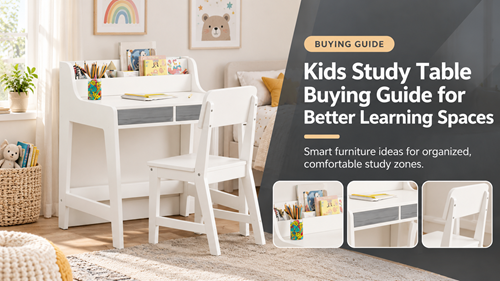
kids study table is easiest to choose when parents start with the room, the child’s age, and the daily routine instead of shopping by appearance alone. A dedicated learning surface can reduce daily setup time when the table, chair, lighting, and storage fit the child instead of forcing adult proportions into a smaller body. The right choice should support safe movement, comfortable use, practical cleanup, and enough flexibility for the room to keep working as needs change.
The best study zone is comfortable enough for reading and writing but simple enough that school supplies can be reset quickly after homework. This guide focuses on measurements, access, materials, stability, storage, and everyday use so families can compare options without turning the room into a collection of oversized or poorly matched pieces.
Kids Study Table: Fit, Function, and Daily Use
Measure seat height, tabletop height, leg clearance, and the distance from the chair to storage before comparing decorative features. A useful buying decision separates the footprint of the furniture from the clearance required to sit, open drawers, climb a ladder, pull out a chair, access storage, make the bed, or walk past the piece.
A desk placed in a quiet corner with good light often performs better than a larger desk that blocks circulation or turns into general household storage. Parents should also consider where the furniture will sit in relation to windows, heaters, doors, outlets, ceiling fans, cords, and other pieces a child could use as climbing steps.
For kids study table, the best test is whether the piece makes the room easier to use on an ordinary weekday. If children cannot reach what they need, if adults cannot clean around it, or if one feature blocks another part of the room, the product is not truly space-efficient.
Six Buying Questions to Work Through
Choose a Desk Scale the Child Can Use Independently
The writing surface, drawers, and chair should be reachable without constant stretching or climbing. children desks Use the linked page as one comparison point, then confirm the current dimensions, materials, age guidance, weight limits, and assembly instructions on the exact product being considered.
Coordinate the Desk and Chair as One System
A good table can still be uncomfortable when the seat height leaves feet unsupported or shoulders raised. study furniture Use the linked page as one comparison point, then confirm the current dimensions, materials, age guidance, weight limits, and assembly instructions on the exact product being considered.
Define a Homework Area With Clear Boundaries
Keep only the supplies needed for current schoolwork so the surface remains usable instead of becoming a storage shelf. homework area Use the linked page as one comparison point, then confirm the current dimensions, materials, age guidance, weight limits, and assembly instructions on the exact product being considered.
Use Adjustability Where It Solves a Real Fit Problem
Height or depth adjustment can extend useful life when the mechanism is stable and easy for adults to set correctly. ergonomic kids desk Use the linked page as one comparison point, then confirm the current dimensions, materials, age guidance, weight limits, and assembly instructions on the exact product being considered.
Plan Light, Storage, and Power Together
Position the desk so lighting, device charging, books, and supplies do not create cable or clutter problems. study room setup Use the linked page as one comparison point, then confirm the current dimensions, materials, age guidance, weight limits, and assembly instructions on the exact product being considered.
Choose Storage That Supports Learning
A small number of visible categories for paper, pencils, books, and devices is easier to maintain than many tiny compartments. learning furniture Use the linked page as one comparison point, then confirm the current dimensions, materials, age guidance, weight limits, and assembly instructions on the exact product being considered.
Kids Study Table Fit and Function Table
A study setup should support posture, focus, storage, and simple cleanup. A simple room plan is often more useful than comparing long feature lists because it reveals which details actually change comfort, safety, storage, or movement.
| Decision Point | What to Check | Why It Matters |
|---|---|---|
| Table height | Elbows can rest without raised shoulders | Improves writing comfort |
| Chair height | Feet supported and knees comfortable | Reduces dangling and slouching |
| Lighting | Even light without screen glare | Supports reading and writing |
| Storage | Supplies within easy reach | Keeps the work surface clear |
| Location | Quiet with a clear walkway | Reduces interruption and clutter |
Create a Study Zone That Resets in Five Minutes
Give every everyday school supply one visible home and remove unrelated toys from the immediate work surface. Keep the first setup simple enough that the child and caregiver can repeat it without moving several other objects each time the furniture is used.
If the desk is shared between crafts and homework, use portable bins so one activity can be cleared without mixing materials. Recheck the layout after a week of normal use. Small adjustments to chair position, storage zones, bedding, basket placement, or access paths can make a larger difference than adding another piece of furniture.
Before the Furniture Goes Into Daily Use
- Measure child and chair height
- Check leg clearance
- Place light on the non-writing side
- Secure loose cables
- Keep heavy books on lower shelves
- Limit supplies on the desktop
- Check drawer stops and hardware
- Reassess fit each school term
As children grow, revisit kids study table rather than assuming the first setup should remain permanent. Check fit, posture, reach, clearance, hardware, and storage habits whenever the room starts feeling crowded or the child begins using the furniture differently.
Keep the Study Area Stable and Uncluttered
Desks with hutches, shelving, or tall storage should be assembled and secured exactly as directed. Follow the exact manufacturer instructions for assembly, weight limits, guardrails, anchors, ladders, mattresses, and wall clearance where they apply. Never improvise around a missing fastener or damaged structural part.
For broader furniture safety, review the CPSC Anchor It furniture tip-over guidance. Tall or climbable furniture deserves particular attention because drawers, shelves, rails, and decorative surfaces can attract children even when the piece was not designed for climbing.
Keep lamps, cords, power strips, and heavy objects arranged so they cannot be pulled onto the child or block the exit path. Stop using a piece if it becomes unstable, cracked, loose, sharply damaged, or difficult to operate safely until it is repaired or replaced according to the manufacturer’s directions.
Choose a Desk That Supports the Routine, Not Just the Room Theme
A useful study table makes sitting, writing, storing materials, and clearing the surface easier every day. The most useful furniture earns its space by solving a recurring household problem without making another part of the room harder to use.
The final decision on kids study table should come from measured room fit, current manufacturer information, the child’s age and abilities, and a routine the family can maintain. Good design is not just how the room looks on day one; it is how safely and comfortably the room works after months of normal use.
Frequently Asked Questions
What height should a kids study table be?
Use the child’s seated posture and the manufacturer’s size guidance; elbows should reach the surface without raised shoulders.
Does a child need an adjustable desk?
Not always. Adjustability is useful when it creates a better fit or longer useful life without adding instability.
Where should the desk be placed?
Choose a well-lit area with a clear walkway, manageable distractions, and safe access to any needed power.
How much storage should a kids desk have?
Enough for current school supplies, but not so much that the desk becomes a general toy or clothing storage unit.
How often should desk fit be checked?
Reassess each school term or growth spurt, especially chair height, foot support, and screen position.
