
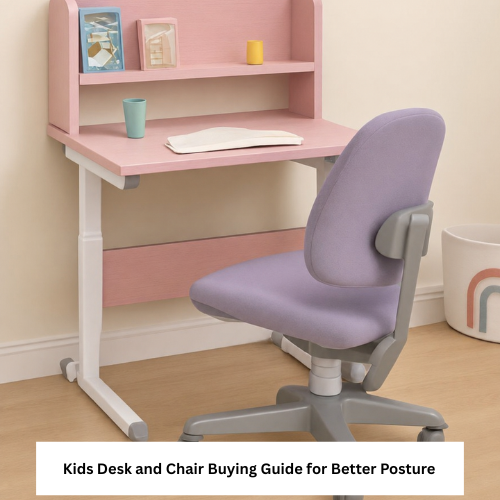
A properly fitted kids desk and chair can make homework, drawing, reading, and computer activities more comfortable. The set should match the child’s current body size while providing enough adjustment or growth room to remain useful as the child gets taller.
A desk that is too high may encourage raised shoulders, while a chair that is too low can leave the feet unsupported. Parents should therefore compare seat height, desk height, seat depth, back support, foot placement, work-surface size, and available room space before buying.
Kids furniture hub shoppers should also verify the manufacturer’s recommended age range, weight limits, materials, assembly instructions, warranty, replacement parts, and return policy.
How to Fit a Kids Desk and Chair Correctly
Start by measuring the child while they are sitting naturally rather than relying only on age.
The child should be able to:
- Sit with the back supported
- Keep shoulders relaxed
- Rest forearms comfortably on the work surface
- Bend elbows at a comfortable angle
- Keep knees from pressing against the desk
- Place feet flat on the floor or a stable footrest
- Move in and out without hitting drawers or supports
- Reach books and supplies without excessive stretching
A chair that fits today may become too small quickly. Adjustable models can be useful, but only when the adjustment range covers the child’s current measurements.
Measure the Child
Useful measurements include:
- Floor to the back of the knee
- Seat to shoulder height
- Hip width while seated
- Thigh length
- Elbow height while seated
- Overall standing height
The seat should support most of the thighs without pressing behind the knees. The backrest should provide support without pushing the child forward.
Measure the Room
Before ordering, measure:
- Available wall width
- Floor depth
- Clearance behind the chair
- Drawer-opening space
- Door and closet clearance
- Distance from electrical outlets
- Space for a lamp or monitor
- Storage space above and below the desk
A small room desk should leave a clear walking path and should not block doors, heating vents, or emergency access.
| Feature | Why it matters | Useful for | Possible limitation | What to verify |
| Adjustable seat height | Helps feet and knees remain supported | Growing children | Adjustment may require tools | Minimum and maximum height |
| Adjustable desk height | Keeps the work surface closer to elbow level | Multi-year use | Some frames may wobble at full height | Locking mechanism |
| Tilting desktop | May support reading or drawing positions | Art and reading activities | Items may slide from the surface | Angle range and edge stop |
| Footrest | Supports feet when the chair is high | Smaller children | Fixed footrests may not fit every child | Height and stability |
| Fixed wooden chair | Simple and stable | Younger children | Limited growth adjustment | Seat and desk proportions |
Choose the Correct Desk Height
The work surface should allow the child to rest the forearms without raising the shoulders or leaning forward excessively.
When the desk is too high, the child may:
- Shrug the shoulders
- Lift the elbows
- Tilt the head
- Sit on the front edge
- Use cushions to gain height
When the desk is too low, the child may:
- Round the back
- Lean over the work
- Lower the head for long periods
- Push the knees against the underside
An adjustable desk may help, but parents should verify how the height changes and whether both sides lock securely.
A height-adjustable children’s study set can help shoppers compare adjustable desk, chair, drawer, and work-surface features, but verify the current measurements and package contents before buying.
Choose the Correct Chair Height
The chair should allow the feet to rest firmly on the floor.
When this is not possible, use a stable footrest designed for the setup rather than allowing the legs to hang.
Check:
- Minimum seat height
- Maximum seat height
- Seat width
- Seat depth
- Backrest height
- Footrest position
- Caster design
- Adjustment controls
An ergonomic kids desk chair may provide height and depth adjustments, but the listed range must still match the individual child.
Do not assume the word ergonomic confirms a proper fit. Verify before buying.
Desks With Shelves and Storage
A children’s study desk with bookshelf may help combine homework furniture and book storage in a limited area.
Check whether the shelving:
- Is within safe reach
- Has raised edges when needed
- Leaves enough writing space
- Blocks natural light
- Requires wall anchoring
- Can hold the intended books
- Interferes with a monitor
- Adds excessive weight above the desk
Store heavier books on lower shelves. Avoid placing heavy decorative objects above the child’s head.
Assembly and Installation
Read the complete assembly instructions before beginning.
Check the package for:
- Desktop
- Legs
- Chair components
- Cross supports
- Drawers
- Shelves
- Bolts and screws
- Adjustment knobs
- Footrest
- Wall-anchoring hardware
- Tools
- Instructions
Assemble the furniture on a protected, level floor.
Do not substitute fasteners unless the manufacturer approves the replacement. An incorrect screw length may damage the surface or weaken the connection.
The kids study desks for home learning guide can help parents compare study-space needs before choosing a specific desk style.
Conclusion
The right kids desk and chair should support relaxed shoulders, stable feet, comfortable arm placement, and enough room for books or technology. Measure both the child and room, check every adjustment range, inspect materials and stability, and review assembly, anchoring, warranty, and return information before purchasing.
FAQ
What height should a child’s desk be?
The work surface should allow relaxed shoulders and comfortable forearm support. Use the child’s seated elbow height rather than age alone.
Should a child’s feet touch the floor?
Yes, or they should rest on a stable footrest that fits the chair and desk setup.
Is an adjustable desk better?
It can support growth, but only when the adjustment range fits the child and locks securely.
Does a study desk need wall anchoring?
Models with tall hutches, shelves, or tip-over risks may require anchoring. Follow the manufacturer’s instructions.
How often should desk hardware be checked?
Inspect it after assembly and periodically during use, especially after moving or adjusting the furniture.
