
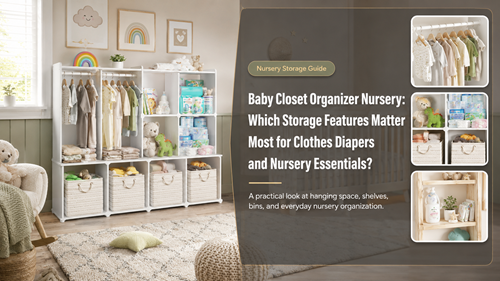
Baby Closet Organizer Nursery is worth evaluating in the context of the whole room, not as a standalone product. Nursery storage should reduce searching during changes and dressing without placing unsafe items within reach. The most useful organizer is not the one with the most compartments; it is the one that separates daily supplies, growth-size clothing, laundry, and backup stock in a predictable way.
This guide is written for expecting parents who want clothing, diapers, linens, and frequently used nursery supplies organized before the baby arrives. The aim is to compare fit, daily use, organization, assembly, maintenance, and safety before purchase so the furniture solves a repeatable household need rather than adding another object to manage.
How To Evaluate Baby Closet Organizer Nursery In A Real Room
The current site listing describes a modular organizer using metal and plastic components, with 12 drawers, 12 shelf areas, customizable sections, and a wall-fixation kit. That makes configuration and stabilization more important than simply counting compartments.
For Baby Closet Organizer Nursery, the most useful comparison is between the furniture’s stated features and the exact behavior expected in the home. Measure the product location, the clearance needed while it is being used, and the path children and caregivers take around it. A dimension that looks compact on a product page can feel very different once doors, chairs, drawers, costumes, bins, or bedding move into their full-use position.
Before ordering, check the current product page for dimensions, materials, included components, age guidance, assembly requirements, maintenance instructions, and any load or mattress limits that apply. Product listings can change over time, so a buying decision should use the current model information rather than a remembered specification.
Create Storage Zones Around The Nursery Routine
Daily Supplies Need The Fastest Access
Keep current-size clothing, diapers, wipes, burp cloths, and sleepwear in the easiest caregiver reach zones. Backup packages and future sizes can occupy higher or less convenient sections because they are not needed at every change.
Hanging Space Should Match Real Garments
Newborn clothing is small, so a full-height adult hanging section can waste space. Short hanging areas with shelves below can be more efficient for outfits, jackets, sleep sacks, or special garments.
The Organizer Should Adapt As The Baby Grows
A modular system can change from diaper and onesie storage to toddler clothing, shoes, toys, and books. Before assembly, identify which panels or shelves can be reconfigured without weakening the intended structure.
Balance Capacity, Child Access, And Room Safety
Use related products and categories as comparison points rather than as a checklist of items to buy. Each link below answers a different planning question, so parents can compare only the furniture types that match the child’s actual routine.
A nursery clothing organizer system should be checked for the exact current drawer, shelf, hanging, and wall-fixation components included in the listing.
For baby wardrobe storage furniture, compare modular systems with rigid cabinets to decide whether flexibility or long-term furniture construction matters more.
A diaper and clothing organization unit can offer a simpler enclosed alternative when families do not need a large number of separate compartments.
An infant room closet solution should be selected together with the dresser, changing area, and laundry location so storage does not duplicate what the room already has.
For a nursery hanging storage cabinet, compare hanging length, cube access, and the stability of the complete assembled structure.
A newborn essentials organizer should keep frequently handled supplies convenient for adults while medicines, creams, cords, and small hazards remain stored appropriately out of reach.
Nursery Storage Zone Plan
This comparison turns product features into room-planning questions. Use the final manufacturer specifications for the exact model when a measurement, load, mattress, age, or assembly detail affects the decision.
| Feature or Use | Potential Benefit | Planning Check |
|---|---|---|
| Current-size clothes | Eye-to-waist caregiver zone | Rotate outgrown sizes regularly |
| Diapers and wipes | Near changing area | Keep packaging and small items secured |
| Sleepwear and sleep sacks | Easy evening access | Avoid overfilled shelves |
| Future clothing sizes | Higher or secondary storage | Label by size to reduce searching |
| Blankets and linens | Folded shelf or drawer | Keep sleep environment free of loose items |
| Shoes and accessories | Lower contained section | Prevent small pieces becoming scattered |
Anchoring And Tip-Over Risk
As babies become mobile, an organizer that once served only adults can become climbable furniture. Install the supplied wall-fixation system exactly as directed, keep drawers and doors working properly, and never place heavy or attractive objects on top where a child may try to reach them.
The CPSC has specific concern about tip-over hazards from clothing storage units. Review its clothing storage tip-over information and follow the organizer manufacturer’s anchoring instructions for the final room position.
Before The Furniture Goes Into Daily Use
- List the supplies used every day
- Separate current and future clothing sizes
- Measure wall width and ceiling clearance
- Plan hanging height before building
- Use labels for closed drawers
- Keep heavy backup stock low
- Install wall-fixation hardware as directed
- Reconfigure storage as mobility increases
After assembly, observe the furniture during the first several days of normal use. Check for rocking, shifting, loosening fasteners, drawers or wheels that behave differently under load, and any new reach or climbing opportunity the furniture creates. Reassess the setup as the child grows because a room that is appropriate today may need different controls later.
Choose Storage Zones That Can Grow With The Child
A Baby Closet Organizer Nursery earns its space when caregivers can find current clothing and changing supplies quickly while backup items remain clearly separated. Plan the zones before assembly, anchor the completed structure as directed, and expect the layout to change as the baby grows and begins accessing lower storage independently.
The final decision on Baby Closet Organizer Nursery should come from measured room fit, current product specifications, the child’s ability, and a realistic daily routine. A feature is valuable only when the family can use it consistently without creating avoidable clutter, awkward access, or new safety problems.
Frequently Asked Questions
How many nursery drawers are actually useful?
The number matters less than whether each drawer has a clear purpose. Too many tiny categories can be harder to maintain than a few well-labelled zones.
Should diapers be stored inside a wardrobe?
They can be if the storage stays dry, clean, and convenient to the changing routine. Keep packaging and small items away from the child.
Is modular nursery furniture safe?
Safety depends on the specific design, correct assembly, wall stabilization, load limits, and ongoing inspection. Follow the manufacturer instructions.
Where should future-size clothes be stored?
Use less accessible shelves or labelled bins so current-size clothing remains fastest to reach.
When should the nursery organizer be rearranged?
Reassess when the baby starts rolling, crawling, pulling to stand, or accessing lower compartments, and whenever clothing or supply needs change.
