
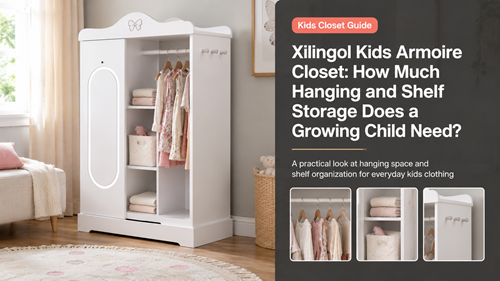
Xilingol Kids Armoire Closet is worth evaluating in the context of the whole room, not as a standalone product. A child’s wardrobe changes quickly, so a useful armoire should balance hanging length, folded clothing, shoes, accessories, and reach height instead of dedicating most of its capacity to one type of storage.
This guide is written for parents whose children’s bedrooms do not have enough built-in closet storage and who want one freestanding clothing station. The aim is to compare fit, daily use, organization, assembly, maintenance, and safety before purchase so the furniture solves a repeatable household need rather than adding another object to manage.
How To Evaluate Xilingol Kids Armoire Closet In A Real Room
The current site listing describes the unit with three shelves, a hanging rack, shoe storage, a hidden jewelry cabinet, and a mirror in a freestanding engineered-wood design. Those features make zone planning, room clearance, and safe stabilization the core buying checks.
For Xilingol Kids Armoire Closet, the most useful comparison is between the furniture’s stated features and the exact behavior expected in the home. Measure the product location, the clearance needed while it is being used, and the path children and caregivers take around it. A dimension that looks compact on a product page can feel very different once doors, chairs, drawers, costumes, bins, or bedding move into their full-use position.
Before ordering, check the current product page for dimensions, materials, included components, age guidance, assembly requirements, maintenance instructions, and any load or mattress limits that apply. Product listings can change over time, so a buying decision should use the current model information rather than a remembered specification.
Plan Hanging, Shelves, And Accessories As One System
Hanging Capacity Should Reflect The Actual Closet
Count dresses, jackets, school uniforms, and special outfits that truly need hangers. T-shirts, pajamas, and play clothes are often more space-efficient when folded into reachable shelves or bins.
Child-Height Access Can Build Routine
Frequently worn clothing placed within safe reach can help children select an outfit and put items away. Less-used accessories and seasonal pieces can occupy higher caregiver zones when the design allows it.
Mirror And Jewelry Storage Need Room Clearance
A mirror or hidden accessory area adds function only when doors, panels, or compartments can open without colliding with a bed, nightstand, or wall. Include open-door depth in the floor plan, not just the cabinet footprint.
Balance Capacity, Child Access, And Room Safety
Use related products and categories as comparison points rather than as a checklist of items to buy. Each link below answers a different planning question, so parents can compare only the furniture types that match the child’s actual routine.
The childrens freestanding wardrobe cabinet page is the best internal source for checking the current shelf, rack, shoe, mirror, and assembly details of this exact unit.
A kids hanging clothes armoire provides a useful comparison when visible hanging access matters more than enclosed shelves and accessory storage.
For bedroom clothing storage for children, compare freestanding wardrobes with dressers and modular closet systems before adding another large footprint.
A compact wardrobe with shelves may be a better fit in a narrow room when the clothing collection is mostly folded rather than hung.
When choosing growing child closet furniture, think about future school clothes, larger shoes, sports items, and the reach zones that will change over the next few years.
A standalone kids garment organizer can be compared with the closet version when accessory organization is as important as hanging capacity.
Wardrobe Capacity By Clothing Type
This comparison turns product features into room-planning questions. Use the final manufacturer specifications for the exact model when a measurement, load, mattress, age, or assembly detail affects the decision.
| Feature or Use | Potential Benefit | Planning Check |
|---|---|---|
| Jackets and dresses | Hanging rail | Allow garment drop length |
| T-shirts and pajamas | Shelves or bins | Keep categories simple |
| Shoes | Low dedicated zone | Protect shelves from dirt |
| Accessories | Small compartment | Keep tiny items controlled |
| Seasonal clothing | Higher shelf | Use labelled contained storage |
| Daily outfit | Child-accessible zone | Avoid forcing climbing or overreaching |
Anchoring And Tip-Over Risk
Freestanding wardrobes and armoires can present serious tip-over hazards if climbed or pulled. Do not treat shelves or hanging rails as play equipment, keep lower areas orderly so the child does not climb for access, and use the manufacturer’s anchoring system in a suitable wall structure.
The CPSC Anchor It program explains why clothing-storage furniture should be secured. Review the furniture anchoring guidance before choosing the final wall and completing installation.
Before The Furniture Goes Into Daily Use
- Inventory hanging clothes before buying
- Measure floor space and door-opening clearance
- Check baseboard interference
- Place heavy items low
- Install anti-tip hardware as directed
- Teach children not to climb shelves
- Recheck hinges and fasteners periodically
- Rotate outgrown clothing before storage becomes overcrowded
After assembly, observe the furniture during the first several days of normal use. Check for rocking, shifting, loosening fasteners, drawers or wheels that behave differently under load, and any new reach or climbing opportunity the furniture creates. Reassess the setup as the child grows because a room that is appropriate today may need different controls later.
Choose Storage Zones That Can Grow With The Child
The Xilingol Kids Armoire Closet is most useful when its hanging rack, shelves, shoe area, and accessory storage match the child’s real wardrobe rather than an imagined future collection. Measure the open-door footprint, anchor the unit correctly, and keep the most-used clothing in safe, reachable zones that can evolve as the child grows.
The final decision on Xilingol Kids Armoire Closet should come from measured room fit, current product specifications, the child’s ability, and a realistic daily routine. A feature is valuable only when the family can use it consistently without creating avoidable clutter, awkward access, or new safety problems.
Frequently Asked Questions
How much hanging space does a child need?
Count the garments that must hang and measure their typical length. Many children need more folded storage than adults expect.
Should a freestanding kids armoire be anchored?
Follow the manufacturer instructions. Freestanding clothing storage should be evaluated for tip-over risk and secured where required or recommended.
Is a mirror useful on a child wardrobe?
It can support dressing independence, but it should be securely integrated and positioned so the child does not need to climb or pull furniture to use it.
Where should shoes be stored?
A low dedicated area can simplify cleanup, provided it is easy to clean and does not create a trip hazard around the cabinet.
How often should wardrobe storage be reorganized?
Reassess every season and after growth spurts so outgrown items do not consume the most accessible storage space.
