
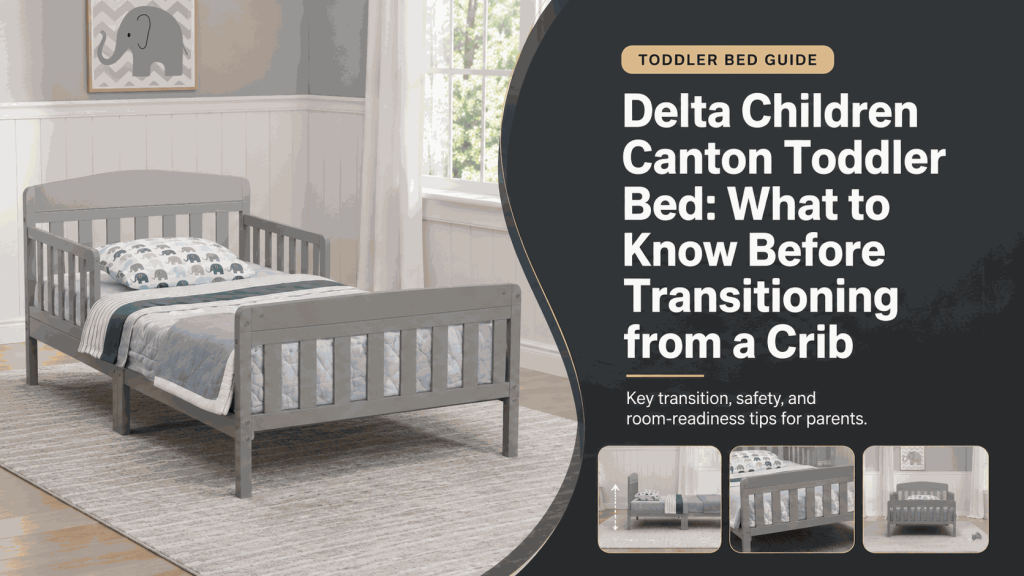
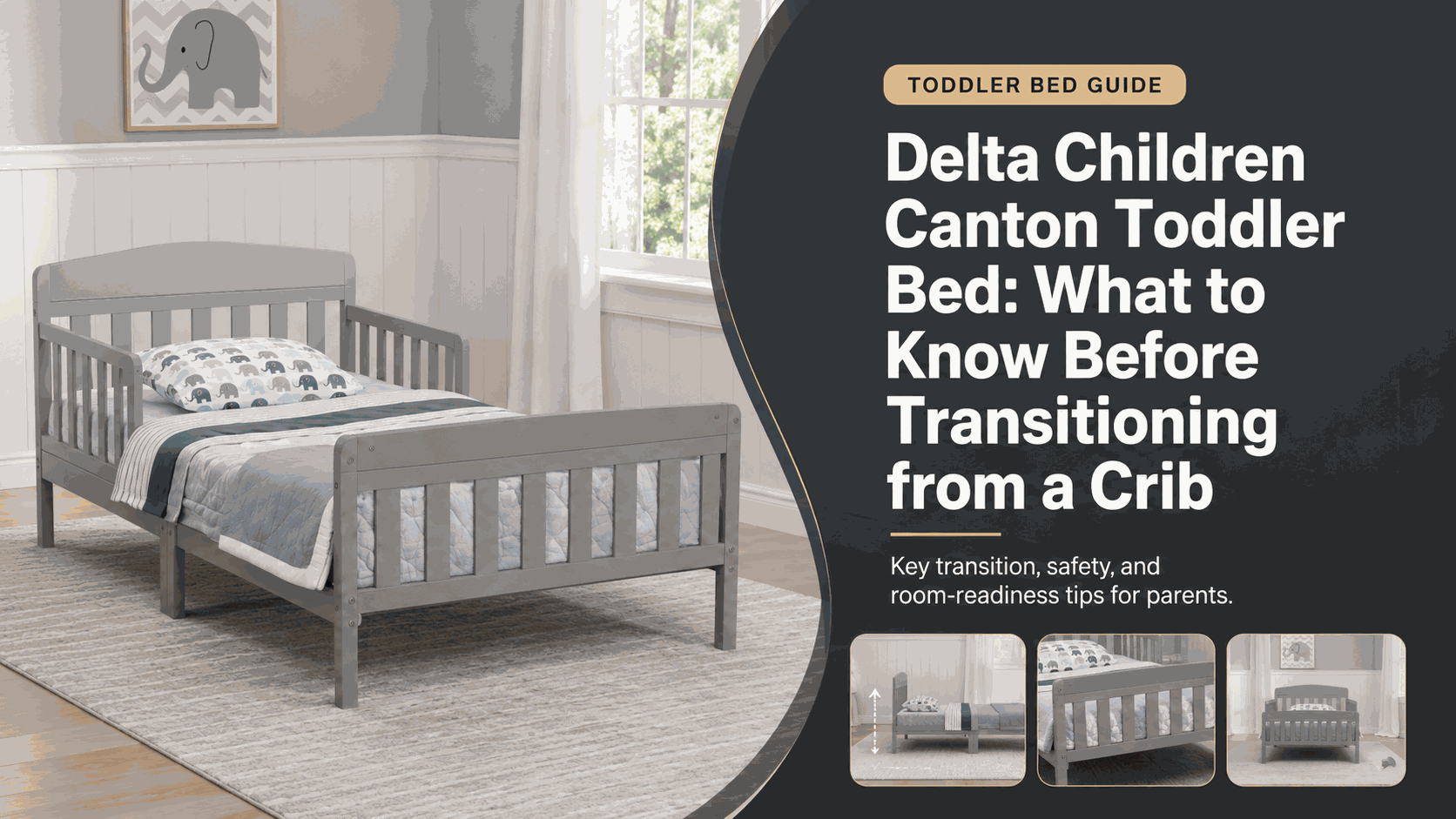
Delta Children Canton Toddler Bed deserves to be judged by the way it fits the room and the family routine, not by the product name alone. Moving from a crib to a toddler bed changes the whole bedroom because the child can get in and out independently. Mattress fit, guardrail condition, room childproofing, bed placement, assembly, and the bedtime routine all become part of the transition.
This guide is for parents seeking a neutral low toddler bed and a calm crib-to-bed transition. It focuses on mattress compatibility, guardrails, room dimensions, assembly, bedding, and the safety changes that come with free access to the bedroom.
Delta Children Canton Toddler Bed: Fit, Function, and Daily Use
The stored product record identifies the Delta Children Canton toddler bed in grey, lists wood construction, assembly required, and a size around 29 by 56.25 by 24.5 inches. The listing states that it fits a full-size crib mattress and is low to the ground; verify the current model, mattress requirements, age and weight limits, and safety instructions.
For Delta Children Canton Toddler Bed, room planning should include the furniture footprint plus the space needed to open, move, reach, sit, sort, or step around it during normal use. Parents often measure only the frame and then discover that bins, doors, stools, chairs, hanging clothes, or a child’s body need extra clearance.
The child’s readiness and the room environment matter as much as the frame. Once the crib rails are gone, windows, cords, dressers, doors, lamps, toys, and other furniture must be evaluated from the perspective of a child who can move around at night.
Six Buying Questions to Work Through
Delta Children Canton Toddler Bed Mattress Fit
Use only the mattress size and thickness allowed by the current bed instructions. Delta Children Canton Toddler Bed mattress fit Gaps created by a wrong mattress can increase entrapment risk.
Delta Children Canton Toddler Bed Guardrail Safety
Guardrails are part of the system, not a substitute for correct mattress fit or room safety. Delta Children Canton Toddler Bed guardrail safety Check that every rail is installed in the intended position and remains tight.
Delta Children Canton Toddler Bed Room Dimensions
Measure the frame plus walking space around the bed. Delta Children Canton Toddler Bed room dimensions Keep the sleep path clear and avoid placing the bed where the child can easily reach cords or windows.
Delta Children Canton Toddler Bed Assembly Planning
Assemble the bed before the transition night so there is time to check hardware, slats, rails, and stability. Delta Children Canton Toddler Bed assembly planning Do not rush the setup at bedtime.
Delta Children Canton Toddler Bed Bed Transition Tips
A familiar bedtime routine often matters more than turning the new bed into a major event. Delta Children Canton Toddler Bed bed transition tips Keep sleep cues consistent while the child learns the freedom to get in and out.
Delta Children Canton Toddler Bed Bedding Setup
Use fitted bedding that matches the mattress and does not interfere with rails or access. Delta Children Canton Toddler Bed bedding setup Follow current pediatric safe-sleep guidance appropriate to the child’s age.
Crib-to-Toddler-Bed Transition Checklist
Use this table to compare Delta Children Canton Toddler Bed with the demands of the room. The goal is not to score every feature equally; it is to identify which details change safety, access, cleanup, comfort, or long-term usefulness.
| Decision Point | What to Check | Why It Matters |
|---|---|---|
| Mattress | Correct size and thickness | Prevents unsafe gaps |
| Guardrails | Installed and secure | Supports edge protection |
| Room | Fully childproofed for nighttime access | Child can leave bed independently |
| Bed location | Away from cords and hazardous windows | Reduces new nighttime risks |
| Routine | Familiar sequence and expectations | Supports a calmer transition |
Prepare the Whole Bedroom Before the First Night
Childproof the room before introducing the new bed. Anchor dressers and bookcases as required, secure cords, control doors and windows, and remove objects the child could climb to reach. The bed is only one part of the new sleep environment.
Keep the first nights predictable. Put the child into the bed at the normal time, use the same story or sleep routine, and calmly return the child if they get up repeatedly. Avoid changing several sleep habits at the same time.
Before the Furniture Goes Into Daily Use
- Confirm the child meets bed guidance
- Verify mattress size and thickness
- Install guardrails exactly as directed
- Check every fastener and support
- Anchor other bedroom furniture
- Secure cords, windows, and doors
- Use fitted age-appropriate bedding
- Keep the nighttime floor path clear
Recheck the bed after the first week because new movement patterns can reveal a loose fastener, squeak, or rail issue that was not obvious during assembly.
Treat the Toddler Bed As a Regulated Sleep Product
Toddler beds are designed around specific mattress and entrapment requirements. Do not modify guardrails, add improvised padding, or use a mattress that does not meet the product instructions.
The CPSC toddler bed safety FAQ explains the federal standard, full-size crib mattress definition, entrapment concerns, and other required safety features.
If a rail, slat, mattress support, or connector is damaged or missing, stop using the bed until the correct replacement or manufacturer-approved repair is completed.
Make the Transition a Room-Safety Change, Not Just a New Bed
A low toddler bed can make getting in and out easier, but the major change is freedom of movement. The best transition pairs correct mattress fit and guardrails with a fully childproofed bedroom and a familiar sleep routine.
The final decision on Delta Children Canton Toddler Bed should come from measured room fit, current manufacturer information, the child’s age and abilities, and a routine the family can maintain. A feature is valuable only when it solves a real household problem without creating avoidable clutter or risk.
Frequently Asked Questions
What mattress fits the Delta Canton toddler bed?
The stored listing states a full-size crib mattress, but verify the current manual for required dimensions and thickness.
When is a child ready for a toddler bed?
Use the product age and weight guidance and discuss readiness with the child’s pediatrician when needed.
Are guardrails enough to make the room safe?
No. The entire bedroom must be childproofed because the child can get out of bed independently.
Should the bed be against a wall?
Follow the manufacturer’s placement instructions and maintain safe clearances from walls, windows, cords, and furniture.
Can I reuse crib bedding?
Only if the mattress and bedding fit correctly and remain appropriate for the child’s age and the bed instructions.
