
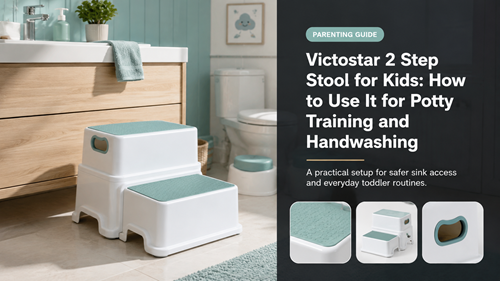
Victostar 2 Step Stool for Kids deserves to be judged by the way it fits the room and the family routine, not by the product name alone. A stool used for potty training and handwashing has to work in two different positions without becoming a movable climbing device. Anti-slip surfaces, step depth, sink distance, storage, and supervision should be planned before the child begins using it independently.
This guide is for caregivers supporting potty-training children who are learning handwashing. It focuses on practical placement, grip, reach, load guidance, cleaning, and how to keep the stool from opening access to other bathroom hazards.
Victostar 2 Step Stool for Kids: Fit, Function, and Daily Use
The stored Victostar product record lists plastic construction, a green-white finish, dimensions around 9.4 inches deep, 13.14 inches wide, and 10 inches high, and describes a three-piece modular design. The listing also describes potty-training and sink-use scenarios; verify the current instructions, load limits, and configuration before use.
For Victostar 2 Step Stool for Kids, room planning should include the furniture footprint plus the space needed to open, move, reach, sit, sort, or step around it during normal use. Parents often measure only the frame and then discover that bins, doors, stools, chairs, hanging clothes, or a child’s body need extra clearance.
A successful routine is predictable: the stool lives in one safe place, the child knows which way to face, and the caregiver controls when it is moved. The product should not become general climbing furniture.
Six Buying Questions to Work Through
Victostar 2 Step Stool for Kids Anti-slip Safety
Check the tread and base grip on the exact floor where the stool will be used. Victostar 2 Step Stool for Kids anti-slip safety Anti-slip features work best on clean, dry, level surfaces and cannot prevent every fall.
Victostar 2 Step Stool for Kids Sink Reach
Position the stool close enough to the sink that the child does not have to lean across the counter. Victostar 2 Step Stool for Kids sink reach Extra reach should come from correct placement, not from standing on the edge.
Victostar 2 Step Stool for Kids Potty Training Use
For potty training, keep the approach to the toilet clear and ensure the stool does not trap the caregiver against a wall or cabinet. Victostar 2 Step Stool for Kids potty training use Supervise every transition until the child can step safely.
Victostar 2 Step Stool for Kids Weight Support
Verify the current manufacturer’s weight guidance for the assembled configuration. Victostar 2 Step Stool for Kids weight support Do not use a published limit as permission for jumping, rocking, or more than one user.
Victostar 2 Step Stool for Kids Bathroom Placement
Keep the stool away from a wet tub edge, swinging door, towel rack, or cabinet that creates a pinch or fall hazard. Victostar 2 Step Stool for Kids bathroom placement Store it where it cannot be used unsupervised to reach dangerous items.
Victostar 2 Step Stool for Kids Cleaning Tips
Soap and water residue can reduce traction. Victostar 2 Step Stool for Kids cleaning tips Clean the standing surfaces and base feet according to the product instructions and dry them before use.
Potty Training and Handwashing Setup
Use this table to compare Victostar 2 Step Stool for Kids with the demands of the room. The goal is not to score every feature equally; it is to identify which details change safety, access, cleanup, comfort, or long-term usefulness.
| Decision Point | What to Check | Why It Matters |
|---|---|---|
| Task | Toilet approach or sink reach | Each location needs different clearance |
| Grip | Dry tread and base | Traction is a system, not one surface |
| Reach | No extreme leaning | Better balance and control |
| Storage | Controlled resting place | Limits unsupervised climbing |
| Condition | No cracks or loose parts | Damage can change stability |
Use the Stool As Part of a Consistent Bathroom Sequence
Teach the child to stop in front of the stool, face the intended task, step up with both feet, and step down before turning away. Small routines reduce sudden twisting and sideways stepping.
Keep handwashing supplies within adult-approved reach but medicines, cleaning products, razors, and electrical items locked away. The stool changes the child’s reach even when it is meant only for hygiene.
Before the Furniture Goes Into Daily Use
- Check the floor is dry
- Confirm the stool configuration
- Place it square to the task
- Keep both feet centered
- Supervise stepping and turning
- Lock hazardous items away
- Clean grip surfaces regularly
- Inspect joints and plastic for damage
If the stool is modular, make sure every piece is correctly seated before the child uses it. Do not improvise a taller configuration that is not shown in the manufacturer’s instructions.
Keep New Reach Away from Bathroom Hazards
Potty-training independence should not create access to hot water, medicines, cleaning chemicals, cords, razors, or windows. The safe zone needs to be reconsidered from the child’s new standing height.
The CPSC home childproofing recommendations are a useful checklist when a stool suddenly changes what a toddler can reach.
Stay within reach around water and stop use if the stool flexes, rocks, cracks, or loses traction. Replace damaged components rather than trying to compensate with mats or improvised pads.
Make the Bathroom Routine Predictable Before Making It Independent
A two-step stool supports independence only when the child’s route, foot placement, reach, and supervision are consistent. Control the location and teach the sequence before expecting the child to manage the task with less help.
The final decision on Victostar 2 Step Stool for Kids should come from measured room fit, current manufacturer information, the child’s age and abilities, and a routine the family can maintain. A feature is valuable only when it solves a real household problem without creating avoidable clutter or risk.
Frequently Asked Questions
Can the Victostar stool be used for both toilet and sink routines?
Use it only in configurations and locations permitted by the current product instructions, with enough floor space for each task.
Do anti-slip feet work on wet tile?
They are not a substitute for a dry floor. Wipe water and soap away before use.
Should a child carry the stool around the bathroom?
Controlled adult placement is safer when moving the stool would create access to other hazards.
How close should the stool be to the sink?
Close enough that the child can reach without leaning or standing on the front edge.
What damage means the stool should be retired?
Cracks, loose joints, distorted plastic, missing grip material, or persistent rocking are reasons to stop use.
